Every job below is one we do ourselves across Venice.
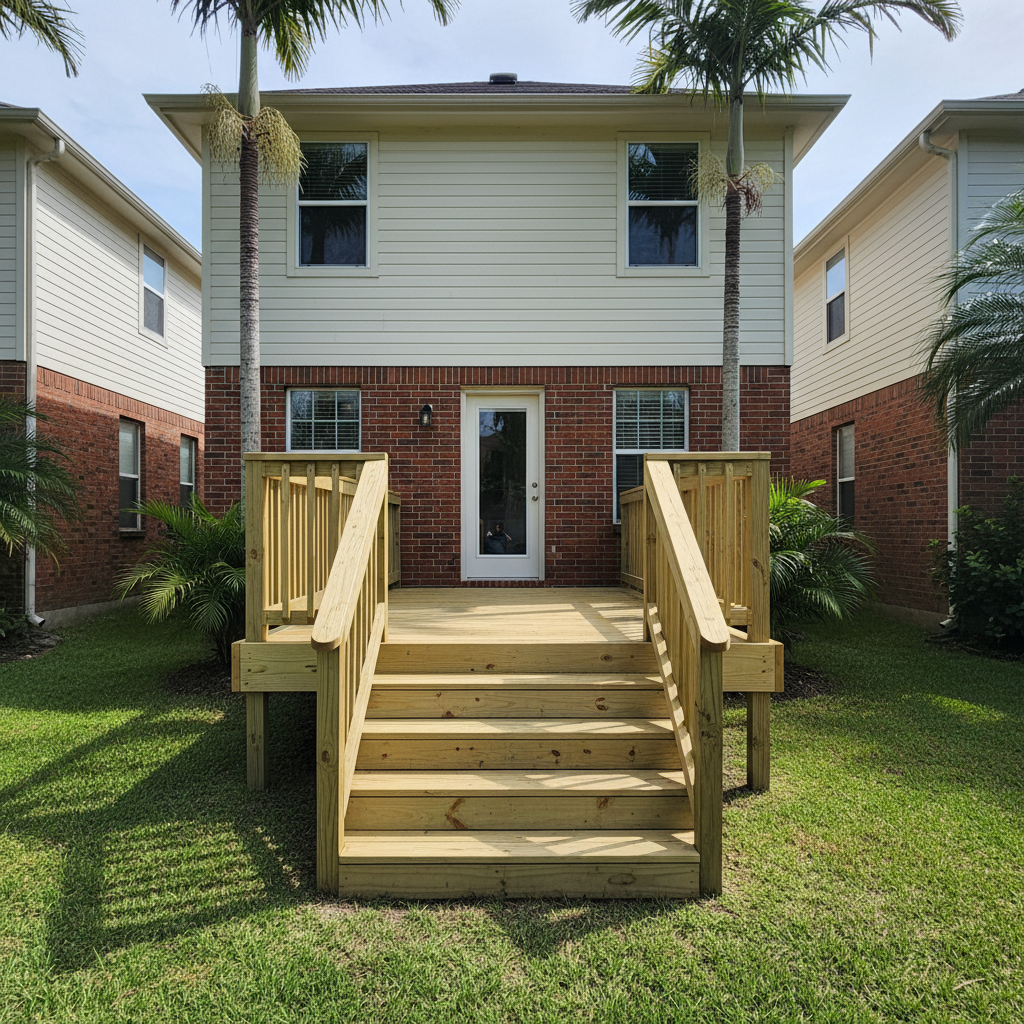
We set posts on poured concrete footers below grade, size the joists to span and local wind load, and bolt the ledger board with flashing tape so water can't get behind it and rot the rim joist. Pressure-treated pine or composite decking, your call, both get stainless or coated deck screws so Gulf air doesn't streak the boards with rust.
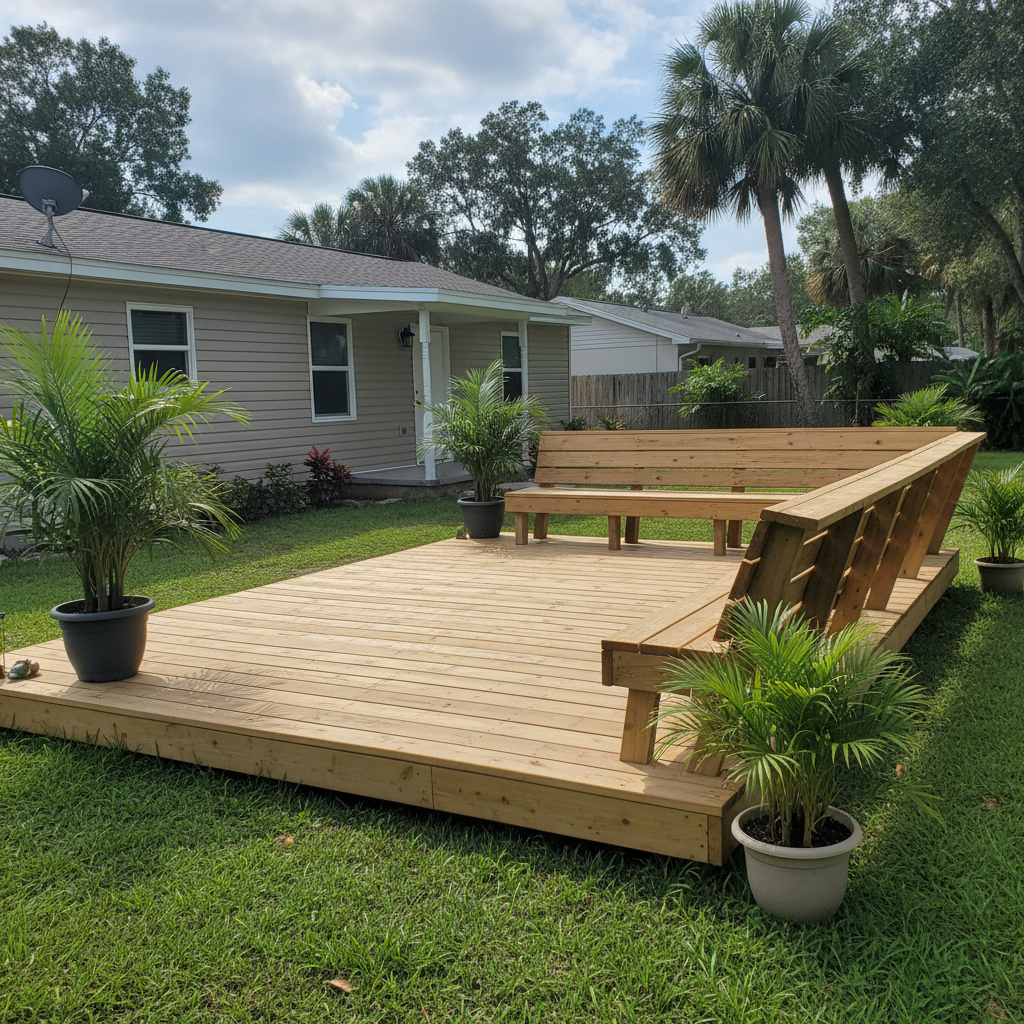
Multi-level decks, built-in bench seating, a sweeping stair run down to the yard, we draw it out before anyone touches lumber. We size footings and beams to the actual load, not a guess, so a hot tub or a crowd at a cookout doesn't bounce the joists.
Soft spots in the decking, a railing that wiggles when you lean on it, a ledger board pulling away from the house, that's most of what we get called for. We pull the bad boards, check the joists underneath for rot before we cover them back up, and re-flash anything that's letting water sit against the house.
New pressure-treated lumber needs to dry out for a few months before stain will actually take, so we check moisture content before we start. We strip old finish, sand the boards smooth, and put down a penetrating stain that handles Florida sun and rain instead of a film coating that'll peel in a year.
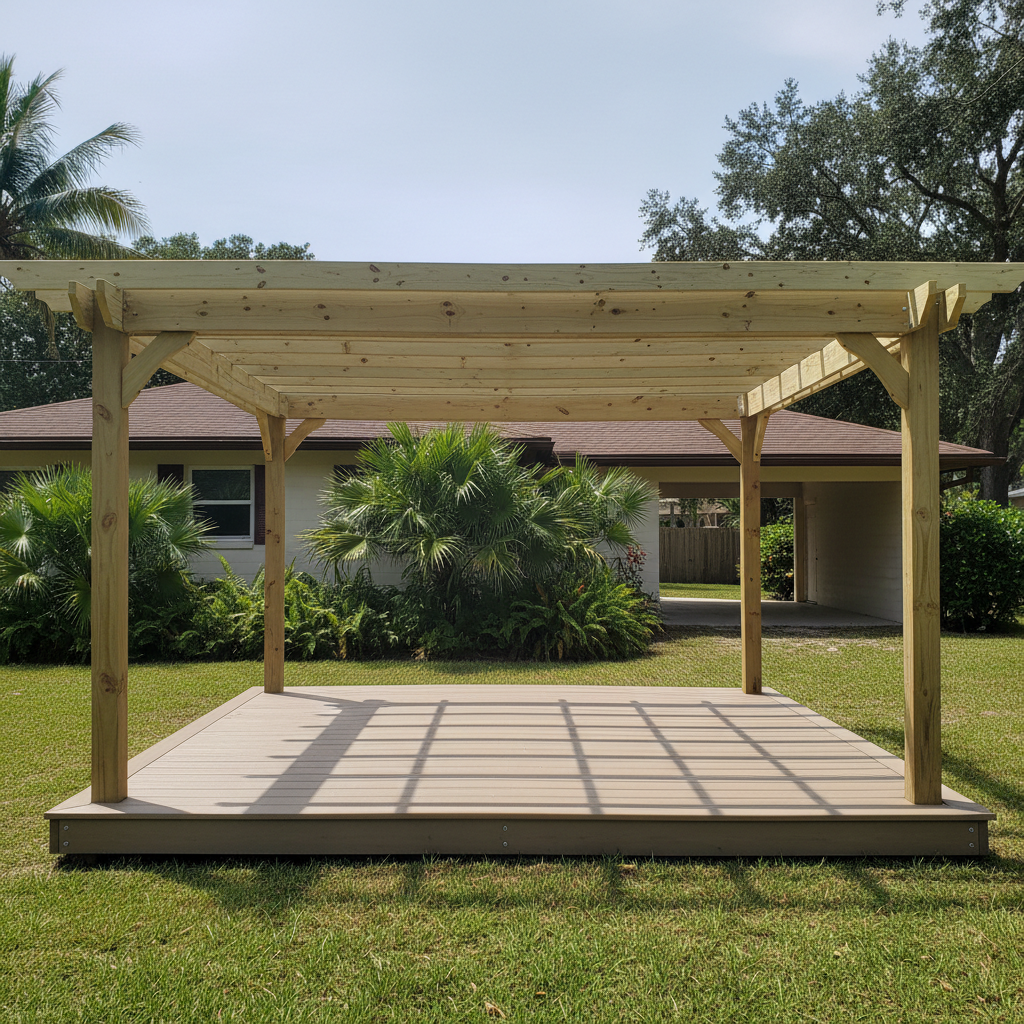
Composite won't rot, won't splinter, and doesn't need staining, which matters a lot in this heat and humidity. It still moves with temperature, so we leave the gaps the manufacturer specs and use hidden fasteners so the board faces stay clean.
If the frame underneath is still sound, we don't tear the whole deck out, we pull the old decking and railings and rebuild the surface on the existing structure. That's usually a fraction of the cost of a full rebuild and it's done in a couple of days, not weeks.
Code calls for balusters spaced so a 4-inch sphere can't pass through them and a top rail that holds up to real lateral force, not just looks good. We do wood, aluminum, and cable rail, all set into posts bolted through the rim joist, not just screwed to the decking.
A screen cage over the deck keeps the no-see-ums and mosquitoes off you in the evening and knocks down a good bit of the afternoon sun. We frame it to tie into the house and the deck structure so it can take wind load, not just staple screen to 2x2s.
Pool decks around here get pavers or sealed concrete more often than wood, since standing water and chlorine splash don't do lumber any favors. We can still build a wood deck that transitions into the pool area, just with ground-contact rated lumber and stainless hardware close to the water.
Old deck's rotted through or just not safe to stand on, we tear it out, haul off the lumber, and pull any old nails or hardware left behind. Usually a one-day job depending on size, and we check what's underneath before anything gets built on top of it again.
Four steps, and no surprises in any of them.
You tell us what you want doing, we look at what is actually there, and we ask the awkward questions early.
In writing, itemised, free. If something might add cost later we flag it now rather than at the end.
Same crew throughout. We cover your floors, keep the dust down and tidy up before we leave each day.
You point out anything you are not happy with and we fix it before the invoice, not after.
These are the towns we're out in every week.
Common questions once a project is actually underway.
Describe the problem and we will tell you what it probably is. No obligation.