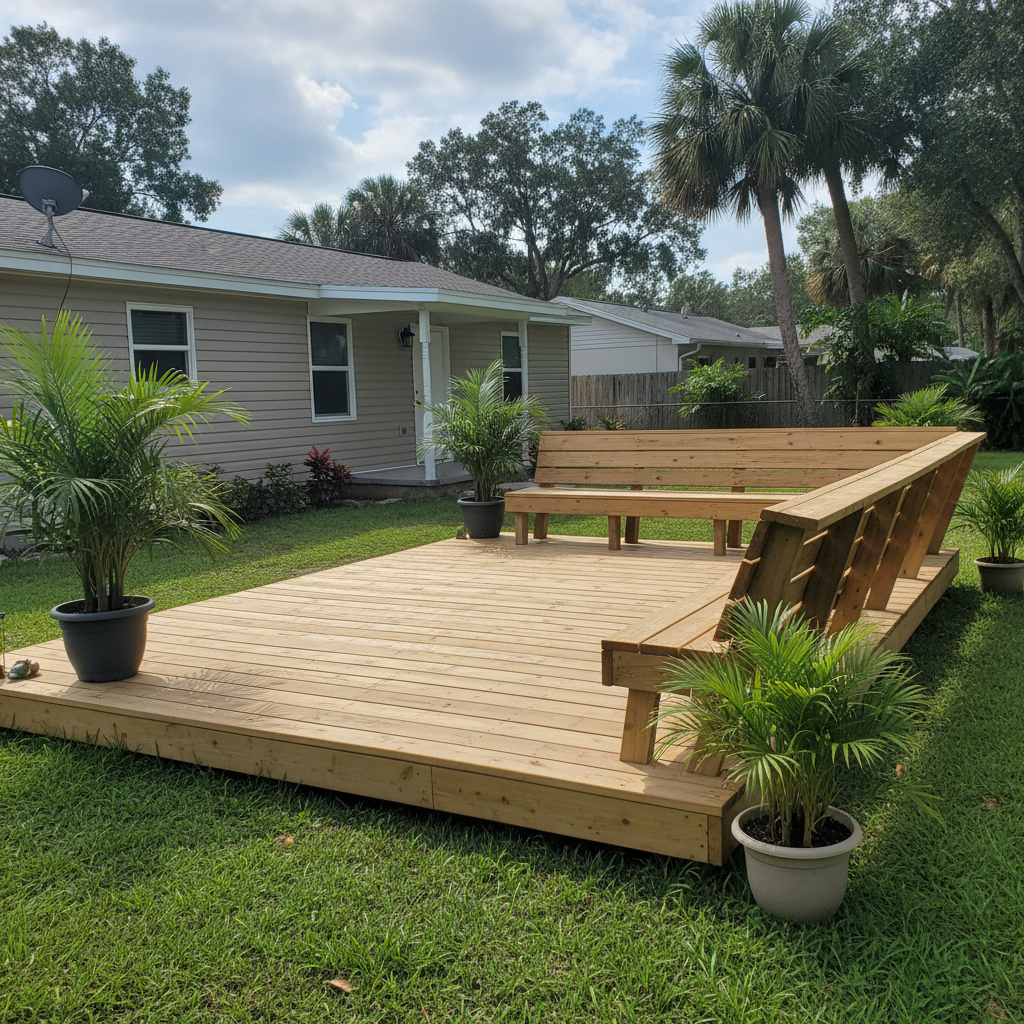
Venice sits in a wind-borne debris region, with sandy soil that drains fast but won't hold a footing the way clay does up north, and a water table that can sit a few feet down on a lot near the canals in South Venice or Venice Gardens. None of that shows up when you're looking at a stack of composite boards in a showroom. It shows up five years later, when a deck that was built wrong starts to tell on itself. Picking a deck builder here is less about who has the nicest brochure and more about who actually knows what this ground and this climate do to a structure.
What the soil and the storms actually demand
Florida doesn't have a frost line, so footings here aren't dug deep to stay below freezing the way they would be in Ohio. But sandy soil compacts differently than clay, and a footing that's too shallow or too narrow can shift after a few wet seasons, especially on a lot that floods even a little during a summer downpour. A builder who's worked this county knows how to size a footing for sand, not just pour a standard 12-inch sonotube because that's what the last job needed.
Wind load matters more here than in most of the country. Sarasota County is in a hurricane zone, and deck framing, railing posts, and especially the ledger board attachment to the house need hardware rated for it, not whatever joist hangers were on the shelf. A ledger that's lag-bolted into stucco over block without the right anchors is one of the most common failure points on older decks in this area, and it's usually invisible until a storm puts real lateral load on it.
Salt air eats fasteners, not just paint
Being a few miles from the Gulf means galvanized screws and standard deck screws corrode faster here than they would inland. Within a couple of years you'll see rust streaks bleeding down composite boards or pressure-treated pine where cheap fasteners were used. A builder who does this work in Venice regularly should default to 305 or 316 stainless steel fasteners and hardware, not because it sounds nice but because mild steel just doesn't last in this air. Ask what fasteners they're spec'ing before you ask about board color.
Permits, inspections, and flood zones
Most attached decks and any deck built above a certain height need a permit, whether the job falls under the City of Venice or unincorporated Sarasota County, depending on the address. A legitimate contractor pulls the permit themselves and doesn't ask you to pull it as the homeowner, because that usually means they aren't licensed to pull it. Expect a footing inspection before concrete gets poured, and a framing inspection before boards go down, especially on anything attached to the house.
If the lot is on a canal or sits in a flood zone, which covers a good number of properties in South Venice and along the Intracoastal side of town, the base flood elevation can affect how a deck ties into the house and whether certain enclosed structures underneath need extra review. A builder who's done pool decks and screened enclosures in this area should be able to tell you, without hesitating, whether your lot needs that extra step. If they look unsure, that's worth noting.
HOAs are common in the newer developments around Wellen Park and IslandWalk, less so in older neighborhoods like Venice Isles or Golden Beach where homes were built mostly in the 1950s through 1970s. On an older lot, expect more surprises underground, old irrigation lines, old footings from a prior patio, sometimes buried debris from the original build. A contractor who's worked older Venice streets won't be caught off guard by that.
What a license actually gets you
Florida requires a state contractor license for most deck construction, and you can look that license up yourself before you sign anything. Check that it's active and check for complaints. This isn't paperwork for its own sake. A licensed contractor carries liability insurance, which matters if a worker gets hurt on your property or if a railing post gets installed wrong and someone leans on it a year later. An unlicensed crew working cash-only might save you fifteen percent up front and cost you the whole deck if it fails an inspection or fails a storm.
Ask for workers' comp coverage too, separate from general liability. A lot of smaller operations skip it, and if it's skipped, that risk sits on you as the homeowner if someone's injured on the job site.
Red flags worth walking away from
- No written contract, or a contract that doesn't specify lumber grade, fastener type, or footing depth.
- A bid that's dramatically lower than two or three others for the same square footage and the same material.
- Reluctance to pull the permit or vague answers about whether one's needed.
- No mention of hurricane straps or tie-down hardware when you ask about wind rating.
- Pressure to pay the full amount up front before any material shows up on site.
What good work actually looks like
A solid deck job in this area usually means pressure-treated or composite boards fastened with stainless hardware, footings sized for sandy soil and poured to the depth the local code calls for, and a ledger board tied into the house with lag bolts and flashing that keeps water from getting behind the siding or stucco. It means the contractor schedules the footing inspection before pouring, not after, and doesn't rush you onto the finished deck before the concrete has had time to cure, which generally takes a few days before it can bear full weight even though it keeps strengthening for weeks after.
None of this is complicated once you know to ask about it. Most homeowners never think to ask about fastener grade or footing depth, which is exactly why some builders don't bother getting it right. A deck that's framed and fastened for this climate will outlast one that just looks good on installation day. If you're weighing bids in Venice right now, ask each builder the same five or six questions above and see who answers without stumbling. That's usually the whole decision right there. You can see more about how we handle these jobs at Alpha Deck Company.